

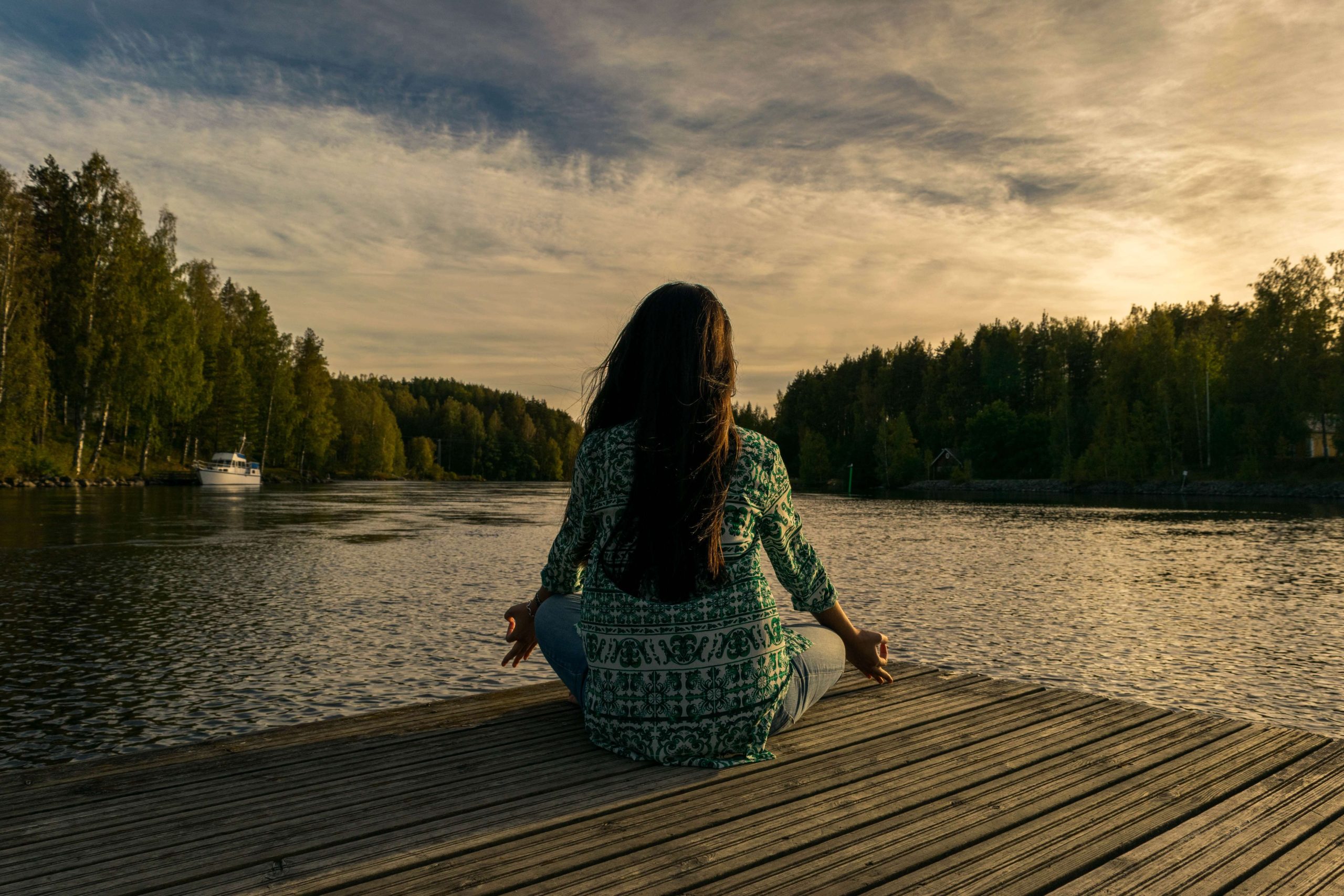
Today, many of us live busy lives filled with work, family responsibilities, phones, social media, and many other daily demands. Meditation for a healthier life can be a simple way to create a few quiet moments during a busy day. Take a moment to think about your own day. How often does your mind feel busy or restless?
At the end of a long day, our bodies may ask for rest. In the same way, our minds also need a little time to slow down, become quiet, and simply breathe.
The good thing is that you do not need special equipment or a lot of money to give your mind this kind of break. A simple practice such as meditation can give you a few minutes each day to pause and pay attention to yourself.
Meditation does not mean forcing yourself to stop all your thoughts. Instead, it can be understood as a simple practice of gently paying attention to your breathing, your thoughts, and what is happening in the present moment.
Why Is Meditation Worth Including in Daily Life?
We often try to take care of our physical health. We choose healthier foods, go for walks, exercise, and try to stay active. We have talked about many of these habits in our other articles.
But while we are busy thinking about everything that happens during the day, it can be easy to forget that our minds also need a break.
Meditation can give you a short opportunity to pause and notice your thoughts and feelings without immediately reacting to them.
For some people, it may feel like a short break in the middle of a busy day. For others, it may become a simple morning habit that helps them begin the day with a few quiet moments.
The most important thing is not to try to meditate perfectly. Instead, focus on making it a simple practice that fits naturally into your everyday life.
What Are Some Possible Benefits of Meditation?
Meditation may offer several simple benefits when it becomes part of a regular routine. It is not a quick solution to every problem, but it can give you a few moments to slow down, pay attention, and reconnect with yourself.
1. May Support Stress Management
Taking a few quiet minutes during a busy day can give you an opportunity to pause and step away from some of the demands around you.
2. May Improve Mindfulness and Present-Moment Awareness
Meditation can help you practice paying attention to your thoughts, feelings, breathing, and what is happening around you instead of always thinking about the past or the future.
3. May Support Emotional Awareness
As you practice noticing your thoughts and feelings, you may become more aware of how you are responding to different situations. This can give you a chance to pause before reacting.
4. Can Provide a Short Period of Relaxation
A few quiet minutes can become a small break in a busy routine. Sitting quietly, breathing naturally, and stepping away from screens can give you some personal time during the day.
5. May Support a Healthy Sleep Routine
A short meditation practice in the evening may help you create a calmer bedtime routine, especially when combined with time away from phones and other screens.
Meditation should not be viewed as a cure for insomnia or a replacement for professional care when sleep problems continue.
6. May Help You Practice Focus and Attention
During meditation, your mind may wander many times. Each time you notice this and gently bring your attention back to your breathing or another point of focus, you are practicing attention.
7. May Encourage Greater Self-Awareness
Meditation gives you a few quiet moments to notice your thoughts, feelings, and daily habits. Over time, this can help you become more aware of how you experience different parts of your day.
These possible benefits are one reason some people choose to include meditation as part of a broader healthy lifestyle. Like other healthy habits, meditation does not need to be complicated. Starting with a few minutes and finding a routine that feels comfortable may be enough.
Do You Need a Special Place to Meditate?
When many people think about meditation, they imagine a completely quiet room, special clothing, or a long period of uninterrupted time.
You do not need any of these things to get started.
You can choose a comfortable and reasonably quiet place that works for you. It could be a quiet corner at home, a balcony in the morning, or a peaceful spot in a garden or park.
You do not have to sit on the floor. If sitting comfortably on a chair works better for you, that is perfectly fine.
The important part is not the place itself. It is the attention you give to those few minutes.
Start With Just a Few Minutes
If you are new to meditation, there is no need to sit for a long time from the beginning.
Start with just a few minutes a day.
Sit in a comfortable position. You can close your eyes or gently lower your gaze. Then bring your attention to your natural breathing.
Notice the feeling of your breath as you breathe in and out.
Your mind will probably wander. You may suddenly start thinking about work, family, tomorrow’s plans, or something that happened earlier in the day.
Do not worry when this happens.
Simply notice that your attention has moved somewhere else, and gently bring it back to your breathing.
You can also allow your body to relax as you sit.
Meditation is not about forcing your mind to become completely empty. It is about practicing the ability to notice when your attention wanders and gently return to the present moment.
In Buddhist practice, mindfulness of breathing is known as Anapanasati. It is a traditional practice of paying attention to the breath and has been practiced for a very long time.
For a beginner, however, you do not need to make the practice complicated. Simply noticing your natural breathing for a few minutes can be a gentle place to start.
Begin Your Day With a Few Quiet Minutes
Instead of reaching for your phone as soon as you wake up, consider giving yourself a few quiet minutes first.
Sit near a window or in another comfortable place and quietly notice your breathing.
Your mind may quickly start thinking about yesterday’s events or everything you need to do today. That is normal.
There is no need to fight those thoughts.
Simply notice them and gently bring your attention back to the present moment.
A small morning practice like this can give you a quiet space for yourself before the demands of the day begin.
You do not need to make it complicated. Even a few peaceful minutes can be enough to create a small pause before you move into your normal routine.
Make Time for Yourself During a Busy Day
If you cannot find time to meditate in the morning, do not worry. You can choose another time that works better for your daily schedule.
You might use a short break during work, a few minutes after finishing household tasks, or some quiet time in the evening.
Try to make those few minutes a break that belongs to you rather than another time to check messages or social media.
Sit comfortably and notice your breathing.
If you hear sounds around you, you do not have to stop them or become annoyed by them. Simply notice that they are there.
If thoughts appear, allow them to come and go without following every thought. When you notice that your attention has wandered, gently bring it back to the present moment.
The goal is not to create a perfectly quiet mind. The goal is to give yourself a few moments of calm attention during a busy day.
You Can Practice Mindfulness While Walking
Meditation does not always mean sitting in one place.
If walking is already part of your daily routine, you can use some of that time to practice simple mindfulness. Regular walking can also be a valuable part of a healthy lifestyle. You can learn more about the benefits of walking in our guide to The Health Secrets of Daily Walking.
For example, while walking, pay attention to how your feet feel as they touch the ground.
Notice your breathing.
Pay attention to the movement of your body as you walk.
You can also notice the environment around you—the feeling of the breeze, the trees, the sounds nearby, or the sights along your route.
Instead of spending the entire walk thinking about work, messages, or everything you need to do later, try to notice where you are and what is happening around you.
If you already walk every day, this type of mindful walking may not require any extra time in your schedule.
It can simply add a few moments of awareness to something you already do.
Bring Your Attention Back to Your Breathing
For someone who is just beginning meditation, breathing can be a simple place to focus.
There is no need to force your breathing or change the way you naturally breathe.
Just breathe normally.
Notice the feeling of the breath as it enters your body.
Then notice it as you breathe out.
When your mind moves to another thought, simply recognize it.
You might quietly tell yourself, “My mind has wandered.”
Then gently return your attention to your breathing.
You do not need to get rid of your thoughts. You do not need to fight them.
Instead, practice noticing them and allowing them to pass while you return your attention to the present moment.
This simple process—notice, accept, and gently return—can become the heart of a simple meditation practice.
Practice Mindful Eating During Your Meals
Meditation does not have to be limited to sitting quietly with your eyes closed.
You can also bring the same idea of paying attention to the present moment into everyday activities, including eating.
As we discussed in our article about healthy eating habits, it can be helpful to give your attention to the food in front of you instead of always eating while looking at your phone or television.
As we discussed in our guide to Healthy Eating Habits: The Art of Eating Well, choosing balanced foods and paying attention to the way we eat can be an important part of a healthy lifestyle.
Take a moment to notice your food.
How does it taste?
What does it smell like?
What is its texture?
Is it warm or cool?
Eating more slowly and paying attention to these simple details can turn an ordinary meal into a calmer experience.
You do not need to eat every meal this way. If you are new to mindful eating, you can simply start with one meal or even a few minutes of one meal each day.
The goal is not to make eating another task that you have to do perfectly. It is simply about being more present with the food you are already eating.
Take a Quiet Moment Before the Day Ends
After a busy day, many of us automatically turn back to our phones, television, or other screens.
You do not have to completely stop using them. Instead, consider setting aside a short period of quiet time before going to bed.
Sit comfortably or choose another position that feels right for you. Take a few slow, natural breaths and allow yourself to notice how the day went.
Was there something that made you happy today?
Was there a small thing you felt grateful for?
You may also notice thoughts about tomorrow’s tasks.
If there is something important that you do not want to forget, write it down. Then return your attention to your breathing and allow yourself to enjoy a few quiet moments.
This small routine can become a peaceful space at the end of your day—a few minutes that are simply for you.
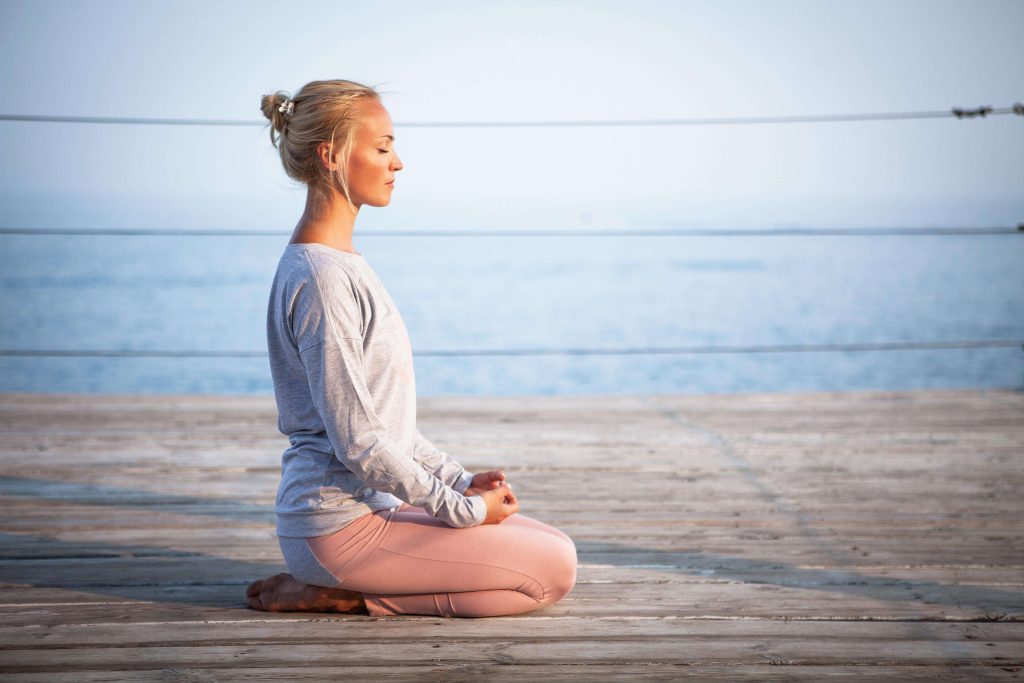
What If Your Mind Will Not Stay Still?
This is one of the most common experiences for people who are new to meditation.
You may sit down expecting to feel calm, only to notice that your mind suddenly becomes full of thoughts.
You may think about work, family, money, tomorrow’s plans, something someone said earlier, or a completely unrelated idea.
Do not assume that you are doing meditation incorrectly.
A wandering mind is a normal part of the practice.
The important part is noticing when your attention has moved away and gently bringing it back.
That is the practice.
If you were able to sit quietly and pay attention to your breathing for five minutes today, that can be a perfectly good beginning.
You can try again tomorrow.
Meditation is not a competition. There is no prize for sitting longer than someone else.
Finding a simple approach that feels comfortable for you and returning to it regularly is more important than trying to make every session perfect.
How Can You Turn Meditation Into a Habit?
If you want meditation to become part of your daily life, consistency can be more useful than setting a large goal from the beginning.
You do not need to promise yourself that you will meditate for 30 or 60 minutes every day.
Start with five minutes.
Once that feels comfortable, you can increase the time gradually if you want to.
Choose a time that fits naturally into your routine.
For some people, this may be shortly after waking up. For others, it may work better after finishing work or household responsibilities.
If possible, try to practice at roughly the same time each day.
Connecting meditation with an existing habit can also make it easier to remember.
For example, you might meditate after drinking your morning water, after brushing your teeth, or before your evening routine.
The goal is to make meditation feel like a small, manageable part of your day rather than another difficult responsibility.
Give Your Phone a Short Break Too
Our phones are often with us throughout the day.
Messages, emails, social media, and notifications can continually pull our attention from one thing to another.
That is why it can be useful to put your phone on silent or place it somewhere away from you while you meditate.
Even if you only have five minutes, try to give those five minutes to yourself.
You do not have to look at a screen every minute of the day.
Sometimes, simply sitting quietly without checking notifications can be a welcome change.
You may find that the hardest part is not the meditation itself but remembering to give yourself permission to pause.
Choose a Meditation Style That Feels Comfortable
There is no single way that everyone has to meditate.
Some people may find it easier to focus on their breathing.
Others may prefer sitting quietly and noticing the sounds and sensations around them.
Some people may enjoy mindful walking, paying attention to their steps, breathing, and surroundings.
You do not need to follow every meditation routine you find online.
Choose a simple method that feels comfortable and fits your lifestyle.
If one approach does not feel right for you, there is nothing wrong with trying another.
The purpose is not to copy someone else’s routine perfectly. It is to find a way of creating a few moments of mindful attention that you can realistically continue.
Combine Meditation With Other Healthy Habits
Meditation should not be viewed as the complete answer to every part of a healthy lifestyle.
It can simply be one small habit alongside other things that support your overall well-being.
For example, you can:
- Make time for regular walking or other physical activity.
- Choose balanced and nutritious foods.
- Drink enough water throughout the day.
- Make an effort to get enough sleep.
- Take short breaks from your phone and other screens.
- Spend meaningful time with family and friends.
A healthier lifestyle usually does not come from making one huge change overnight.
It is often built through small, realistic choices that are repeated over time.
Meditation can be one of those small choices.
One Important Thing to Remember When Meditating
Meditation should not become another source of pressure in your life.
If you feel uncomfortable, distressed, or unusually unsettled while practicing, do not force yourself to continue. Stop, take a break, and choose an approach that feels more comfortable.
Start gently and give yourself time to become familiar with the practice.
Meditation can be a simple way to create a little quiet space in your day. It does not need to become another responsibility or a competition.
It is also important to remember that meditation is not a replacement for professional medical care.
If you are receiving treatment or support for a mental or physical health concern, do not use meditation instead of medical advice or prescribed treatment. Speak with an appropriate healthcare professional when you need guidance.
The purpose of a simple meditation practice is to complement healthy daily habits, not replace necessary care.
Try This Simple Five-Minute Meditation Today
You do not have to wait for the perfect time to begin.
You can try a simple five-minute practice today.
Minute 1: Sit comfortably and allow your body to relax.
Minute 2: Notice your natural breathing. Pay attention to the feeling of breathing in and breathing out.
Minute 3: If your mind wanders, notice it without judging yourself. Gently bring your attention back to your breathing.
Minute 4: Notice the sounds around you and the environment you are in. You do not have to change anything. Simply observe.
Minute 5: Think of one small thing from today that you feel grateful for or appreciate.
When the five minutes are over, slowly return to your normal day.
Five minutes will not suddenly change your entire life.
But giving yourself a few quiet minutes each day can be the beginning of a habit that creates a little more space for yourself in a busy routine.
A Small Step Toward a Calmer Mind
We will not have a calm and easy day every day.
Some days are simply busy. Some days do not go according to our plans. On other days, we may notice that our mind needs a little rest.
When that happens, you do not have to try to fix everything at once.
Instead, give yourself a few quiet minutes.
Stop for a moment and take a natural breath.
Notice where you are.
Pay attention to what is happening around you.
Notice your thoughts without feeling that you have to follow every one of them.
Then, when you are ready, slowly return to your day.
Sometimes, we may not need a major change.
We may simply need a small, quiet moment that we intentionally give to ourselves.
Meditation Is Not About Having a Perfect Mind
One of the most useful things to remember when starting meditation is that there is no need to become perfect at it.
Your mind may wander.
You may feel restless.
You may forget to practice for a day.
You may sit down expecting to feel calm and discover that you have many thoughts instead.
None of this means you have failed.
Meditation is a practice.
Each time you notice that your attention has wandered and gently bring it back, you are practicing.
Instead of judging yourself, try to approach the experience with patience.
A few minutes of regular practice may be more realistic and sustainable than setting a large goal that becomes difficult to maintain.
Let Meditation Fit Into Your Real Life
A healthy routine should work with your life, not make your life more stressful.
You may have work to do, children to care for, household responsibilities, exercise, meals, and many other things competing for your attention.
That is why meditation does not have to take a large part of your day.
Five minutes in the morning may be enough to begin.
A few mindful breaths during a break may be useful.
A short mindful walk may fit naturally into your usual walking routine.
A few quiet minutes before bed may help you create a clear ending to your day.
There is no need to follow a complicated schedule.
Find what works for you and make it simple enough that you can return to it regularly.
Small Healthy Choices Can Add Up
Meditation is only one part of taking care of yourself.
Your overall well-being is also influenced by the everyday choices you make.
Try to stay physically active in ways you enjoy.
Choose a variety of nutritious foods.
Drink enough water.
Make time for sleep and rest.
Spend time with people who matter to you.
Take occasional breaks from screens.
And remember to give yourself some quiet time.
These habits do not have to be perfect.
What matters is building a lifestyle that is realistic, balanced, and sustainable for you.
A healthier life is often created through many small choices rather than one dramatic change.
Regular physical activity is another important part of a healthy lifestyle. If you are looking for simple ways to stay active, you can also explore our guide to Stretching Before and After Exercise.
Give Yourself Permission to Slow Down
Modern life can make it feel as though we always need to be doing something.
There is another message waiting on our phone.
Another task needs to be completed.
Another email needs an answer.
Another piece of information is waiting for our attention.
In the middle of all this, it can be easy to forget that doing nothing for a few minutes can also have value.
You can sit quietly.
You can take a few natural breaths.
You can look outside a window.
You can notice the sounds around you.
You can simply be present for a short while without trying to achieve anything.
This does not mean ignoring your responsibilities.
It simply means giving yourself a small pause before continuing with them.
Start Small and Keep It Simple
If you have never tried meditation before, do not worry about doing everything correctly.
Choose a comfortable place.
Set aside five minutes.
Put your phone on silent.
Sit comfortably.
Notice your breathing.
When your thoughts wander, gently return your attention to the present moment.
That is enough for a beginning.
If five minutes feels comfortable, you can continue with the same amount of time or gradually increase it.
If you miss a day, simply begin again the next day.
There is no need to feel guilty.
The goal is not perfection.
The goal is to create a simple practice that fits into your life.
A Healthier Life Includes Your Mind Too
We often think about health in terms of food, exercise, walking, weight, or physical fitness.
These things are important, but caring for yourself can also include giving your mind moments of quiet attention.
Meditation can be one simple way to do that.
It can be practiced at home, during a quiet break, while walking, or as part of an evening routine.
You do not need expensive equipment.
You do not need a special room.
You do not need to spend hours doing it.
You can simply start with a few minutes and see how the practice fits into your daily life.
Final Thoughts
Meditation is not a method for solving every problem in life.
It is not a replacement for medical care, healthy relationships, physical activity, nutritious food, or enough sleep.
Instead, think of it as one small habit that can give you an opportunity to pause and pay attention to yourself.
Start with a few minutes.
Choose a method that feels comfortable.
Keep it simple.
Try to practice regularly without putting pressure on yourself.
And at the same time, continue making room for the other habits that support a healthy lifestyle, such as balanced eating, regular physical activity, adequate sleep, meaningful relationships, and time away from screens.
For general guidance on physical activity and its role in a healthy lifestyle, you can also visit the World Health Organization’s physical activity guidelines.
Taking care of your health does not mean changing everything at once.
Sometimes, a small choice made today can become the beginning of another healthy habit tomorrow.
So, when your day feels busy, give yourself permission to pause.
Take a breath.
Notice the moment.
And give yourself a few quiet minutes.
Your healthier life does not have to begin with a huge change.
It can begin with something as simple as five peaceful minutes for yourself.